R.O.A.R.
Rex’s Open Assistive Resources
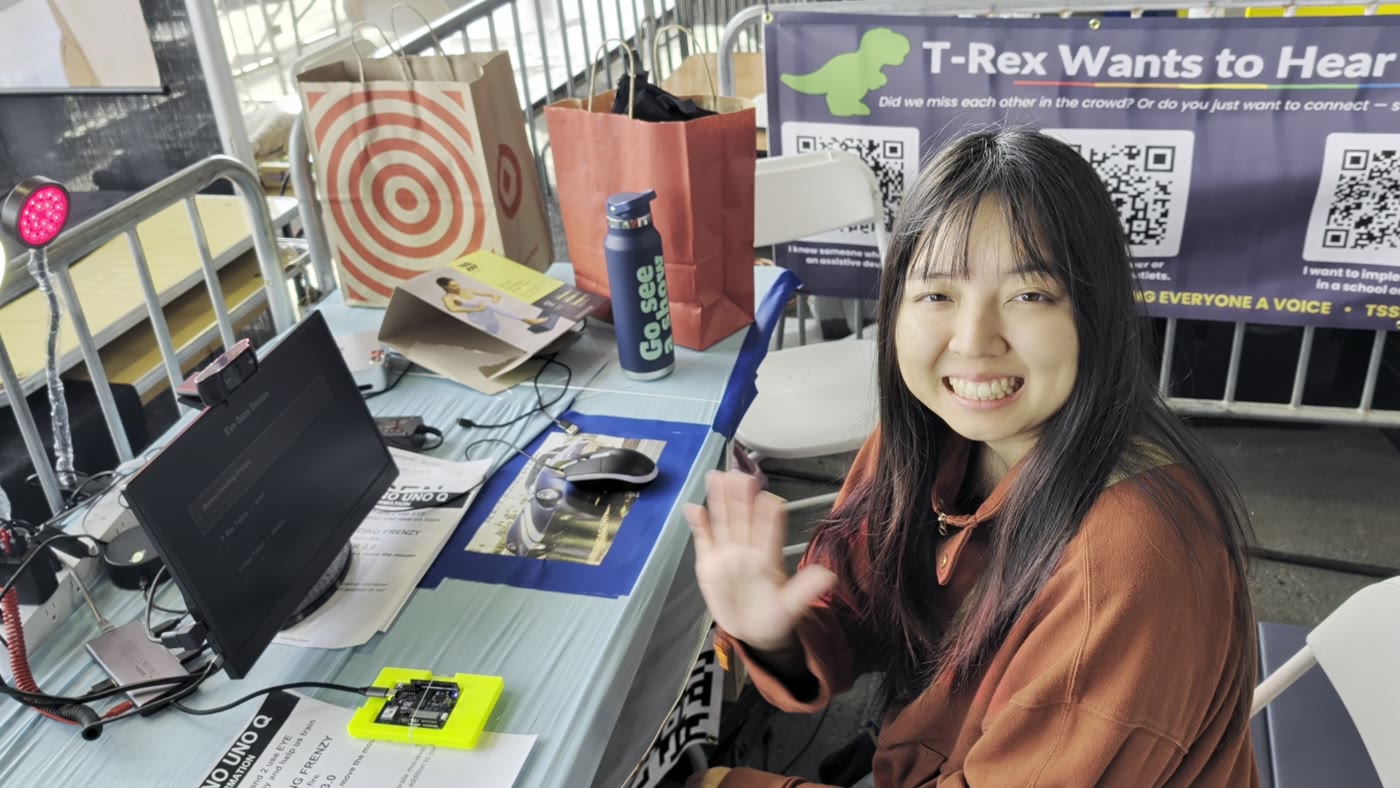
Just got back from Bay Area Maker Faire, and it was amazing. I got to spend time with two of my daughters, and I got to meet, talk with, and be interviewed by Massimo Banzi, co-founder of the Arduino project.
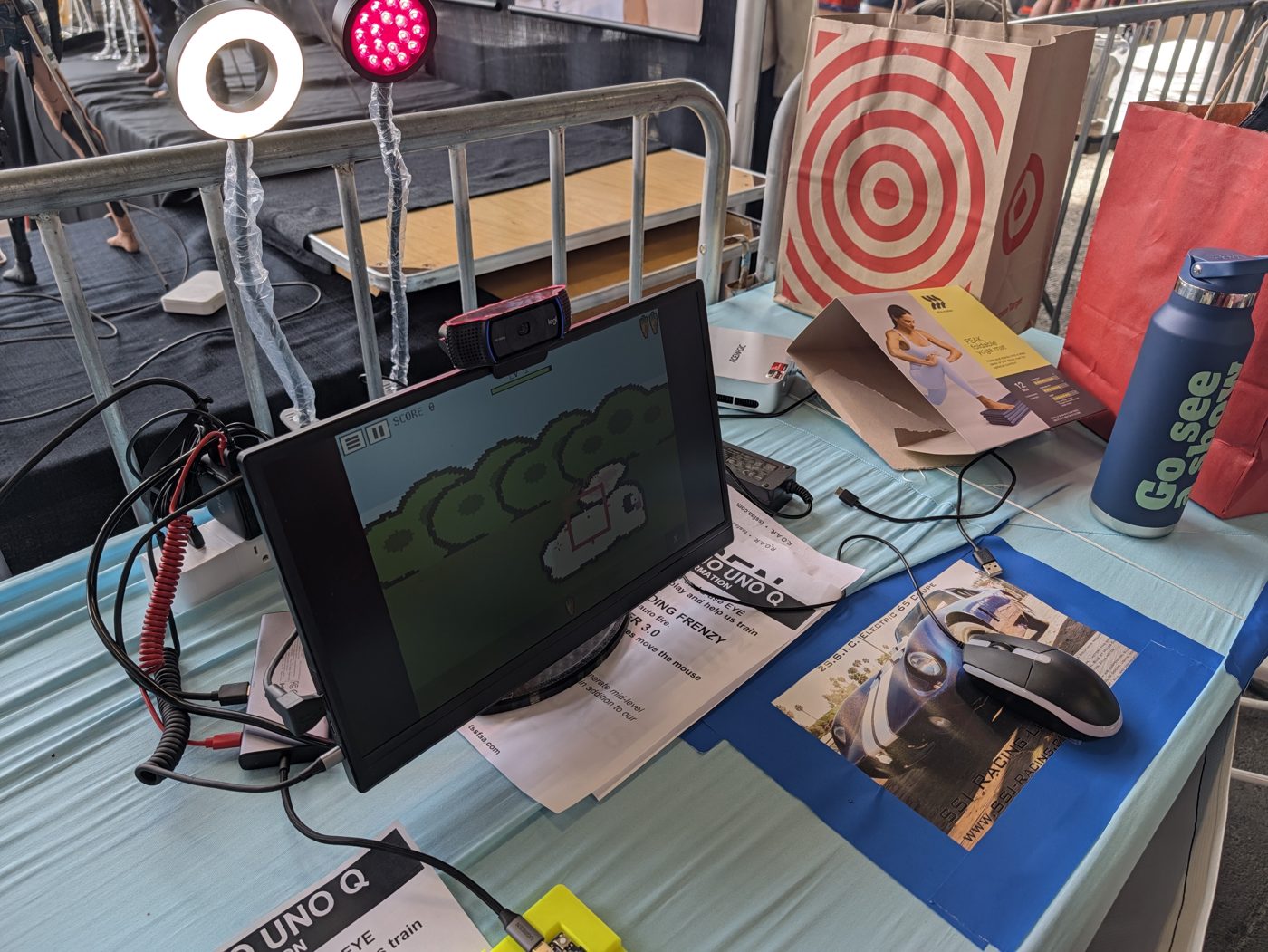
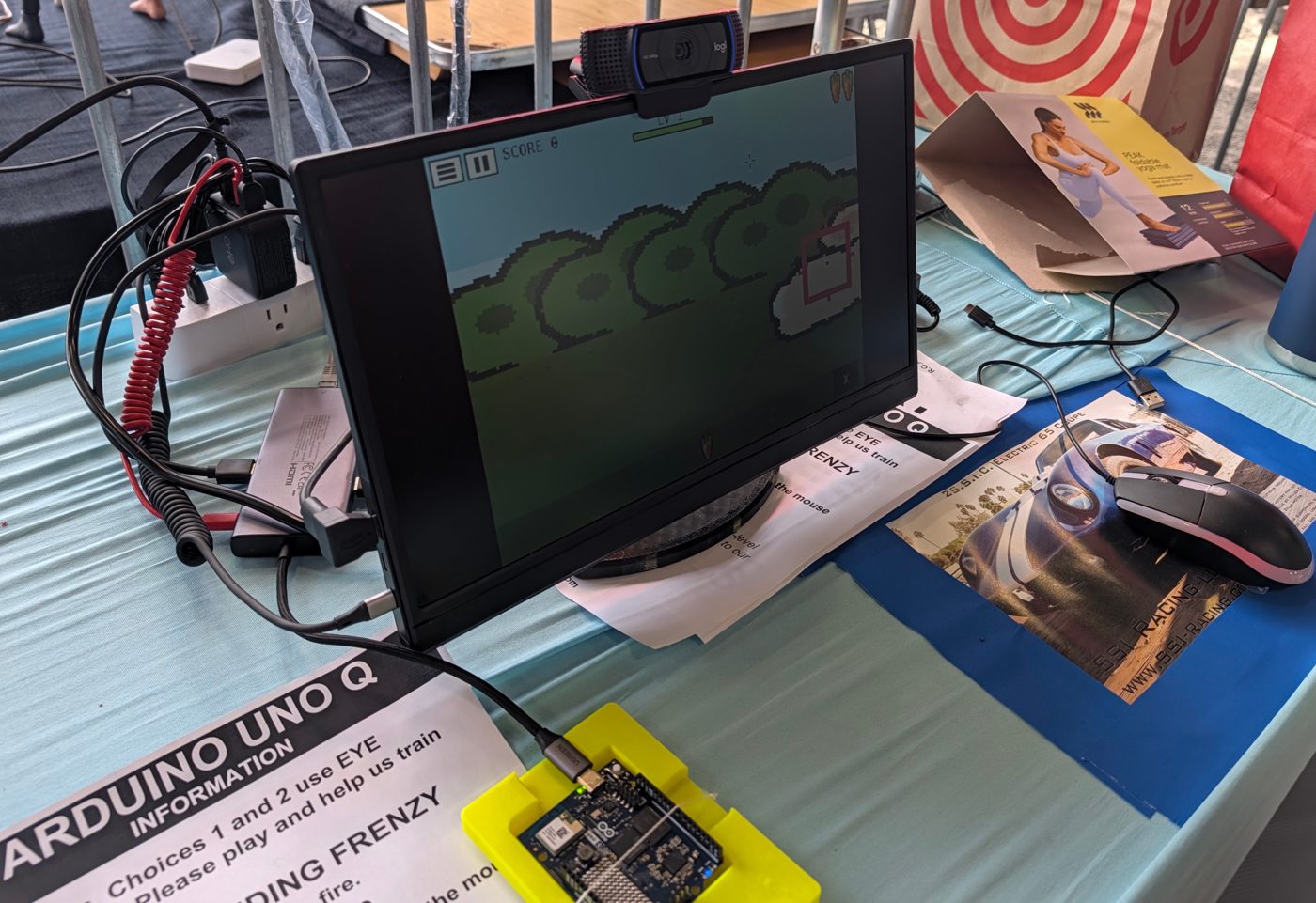
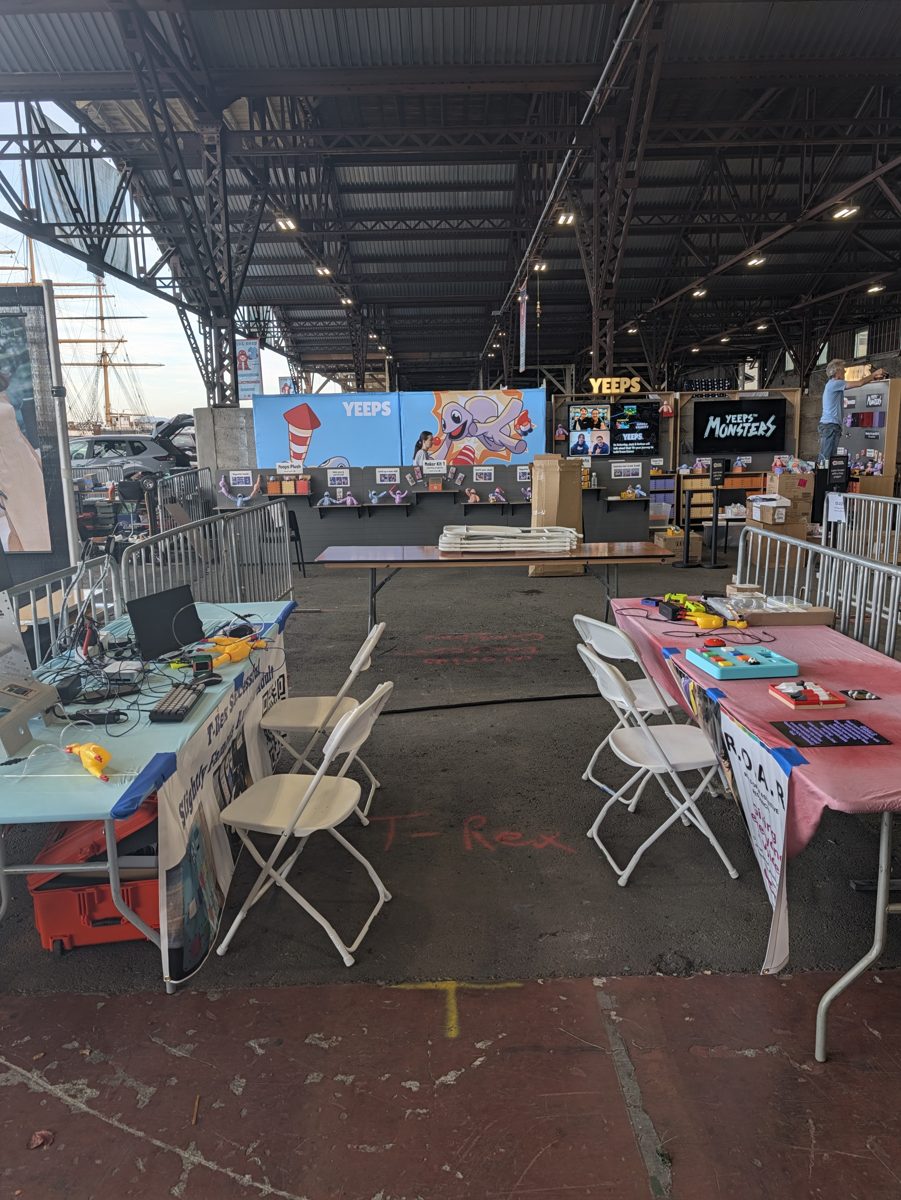
I showed off my Arduino UNO Q eye-tracking software, my entry for DigiKey’s #UNOQDreamLab, and over 100 people tested it and contributed training data. The full project write-up is on Maker.io: Eye Tracking For Special Needs with Uno Q. I had a variety of T-Rex Talker AAC devices on display and two tables of interactive assistive devices, and nothing broke. We also received an Editor’s Choice award.
I talked with the MakeGood folks about working together on a project. I met a lot of amazing makers and shared ideas, and I talked with many neurodivergent people. I believe we found a few more people with unmet needs to help over the next year.
Saw some amazing projects, and ran myself to exhaustion.
New this year: T-Rex Talker gets eyes
Camera eye tracking on an Arduino UNO Q for our sip-and-puff communication devices. Sit 50–70 cm from the camera, keep your head still, follow nine calibration dots — then play Bunny Feeding Frenzy or use the T-Rex Talker board with your eyes.
125 people trained it. 2,413 throws. Nobody briefed.
Those are just the people who sat down at the eye-tracking station — many more played at the booth’s other stations. 87% of them reached a median of 10° or better — good enough to play Bunny Feeding Frenzy and drive the T-Rex Talker board with their eyes. Speech was generated on the UNO Q itself with Piper: no cloud, no account, no network.
And the honest part: about 10% got nothing at all. The data says why — past about 20° of head turn, the tracker doesn’t degrade, it stops.
Keep the head still, and the eye tracking is great.
One father held his daughter’s head still while she played. Tracking went steady, she fed four bunnies in a row, and her run beat every number I’d ever recorded on myself. That one moment reframed the whole project.
After I got home, as part of the Maker.io contest entry, I added head pointing with a small printed tag on a pair of glasses — near-perfect, 0 losses in 359 frames.
What three days of strangers taught us
It works — for big targets. A standard webcam held most people inside one box of a 4×2 grid: 87% reached 10° or better. “Not-yet-great” eye tracking, but real.
Head still: great eye tracking. Head turned past ~20°: it stops. With the head held still, tracking was dead steady — and wheelchair headrests already do that holding for many real users. Turn more than about 20° and the camera loses an eye, so tracking doesn’t slowly get worse; it stops.
Light matters more than anything. A cheap red LED lamp made gaze 3.2× steadier and, just as important, predictable.
Simple wins. A seven-parameter model beat a 66-parameter one, and a nine-point calibration is all a queue will sit through.
Be honest about bugs. A zoom bug skewed the first two days. Gaze input and display scale must stay decoupled.
Where it goes next
GPU acceleration. At the Faire all inference ran on the UNO Q’s CPU — our GPU-capable pipeline crashed in testing and the deadline won. Bringing up the Adreno GPU is next, and it’s what makes two cameras practical.
Two NoIR cameras. We knew from the beginning that two cameras would be better, and Massimo Banzi told us how to connect them: a carrier board with two CSI camera ports, so we always see both eyes and get head position directly — lit with 850 nm IR, which makes pupils pop.
Head tracking as its own input. A printed ArUco tag on glasses gave near-perfect head pointing (added after the Faire for the Maker.io contest). Next: use it as a selection mode, and feed it into the eye model to cancel head movement.
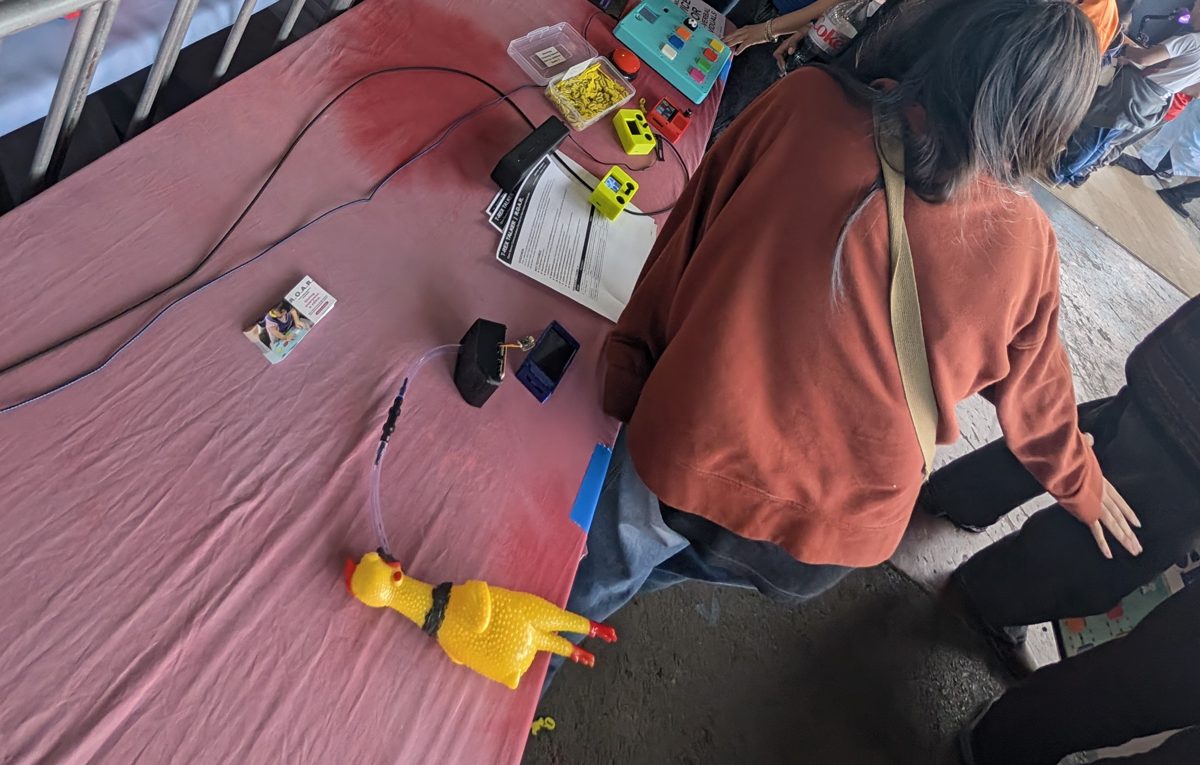
Breath and chicken to throw. At the Faire the game ran on auto-throw; next it gets the T-Rex Sip-N-Puff and the rubber chicken.
Tell people when they’ve drifted. Turn the NeoPixel ring green-amber-red for “you’ve moved since calibration,” keep tracking with one eye when the other is lost, and quietly re-center from every confirmed selection.
New partners and people. A possible project with MakeGood, and a few more people with unmet needs to help over the next year.
The full write-up — the data, the red-lamp experiment, and what’s next.
Maker.io: Eye Tracking For Special Needs → Summary on this site →👍 Please give it a thumbs up on Maker.io — click the like button next to the title (free DigiKey login). Every like helps more people find it.
Also at the booth
Two more hands-on stations, both open source, both designed to get you playing (and thinking) fast.
T-Rex’s Rubber Chicken Challenge
Two players. Two chickens. Rotate through button choices, hold to confirm, race to hit the right answer first. It’s our AAC trainer disguised as a party game — and it’s a great way to feel what it’s like to communicate through a limited input.
Fresh from its debut at Open Sauce 2026, with an updated build for the Faire. (Why a chicken? Sipping and puffing through a straw is easier — but for hygiene, we don’t want your lips on our straws.)
Interactive Communication Demo
The hands-on demo from last year, back with the current hardware. Try the T-Rex Talker family — button boards, touch screens, and the Sip-N-Puff — and see how each input matches a different set of abilities.
The goal isn’t to sell a product. The goal is to hand you a device, watch you use it, and start a conversation about the person in your life it might fit.
The trip
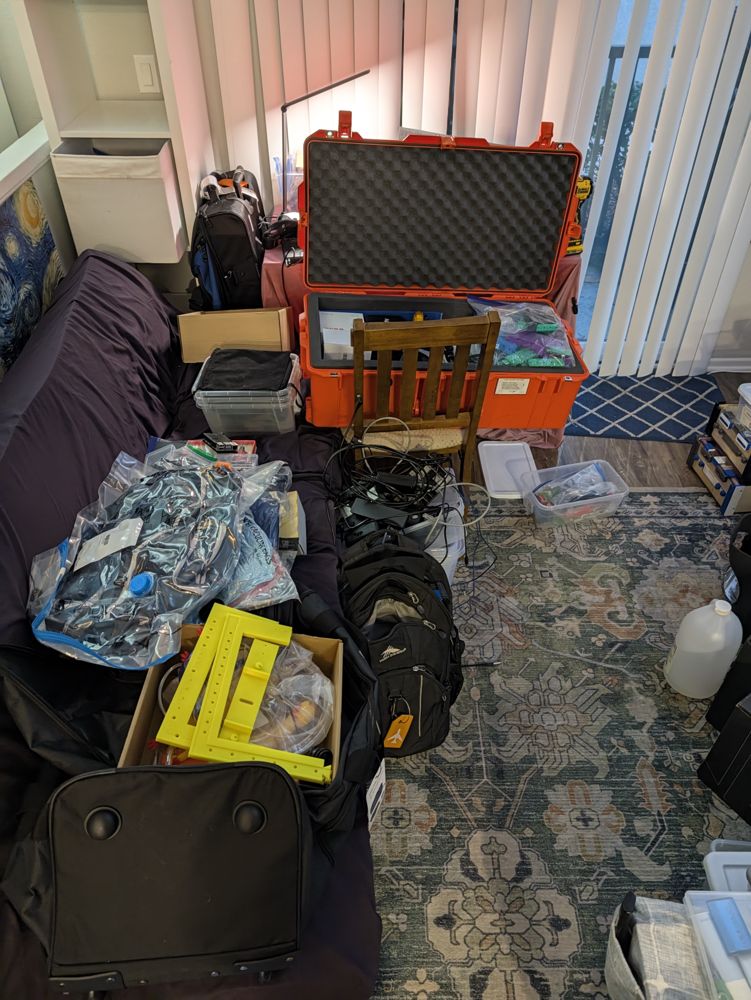
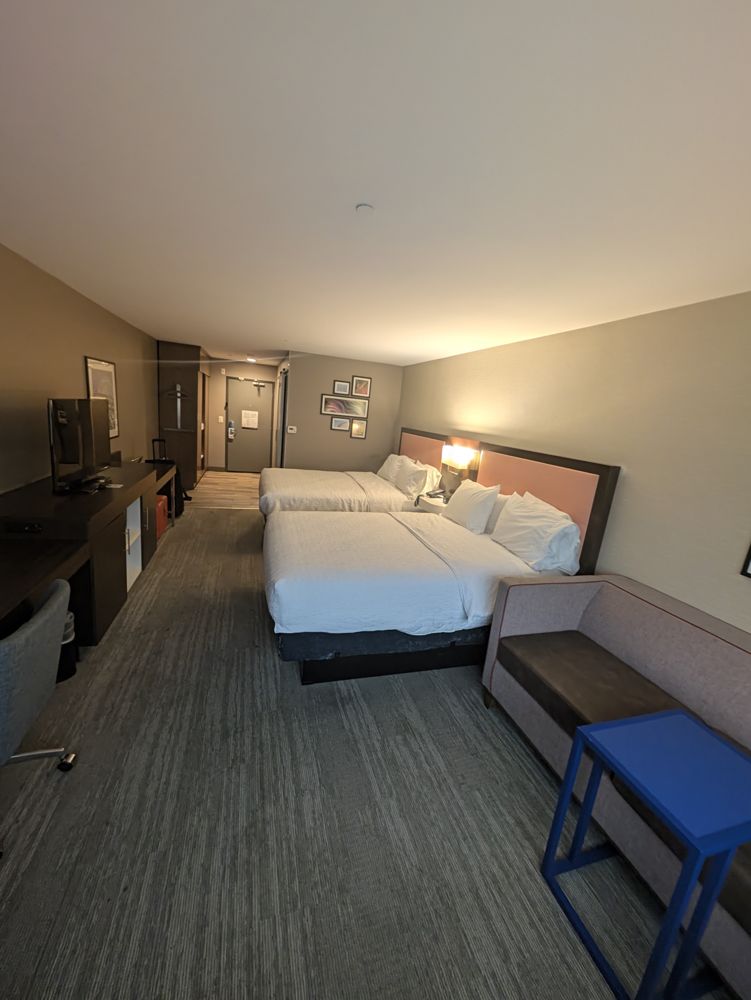
Two tables of demos don’t pack themselves. From the living-room floor to Mare Island and back — with time with two of my daughters along the way.

From the booth
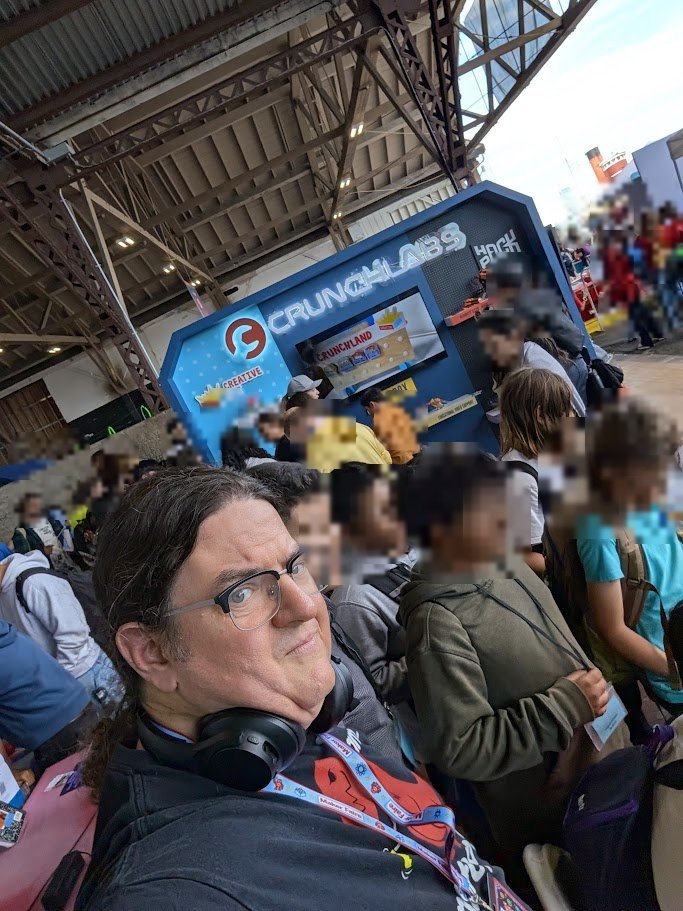
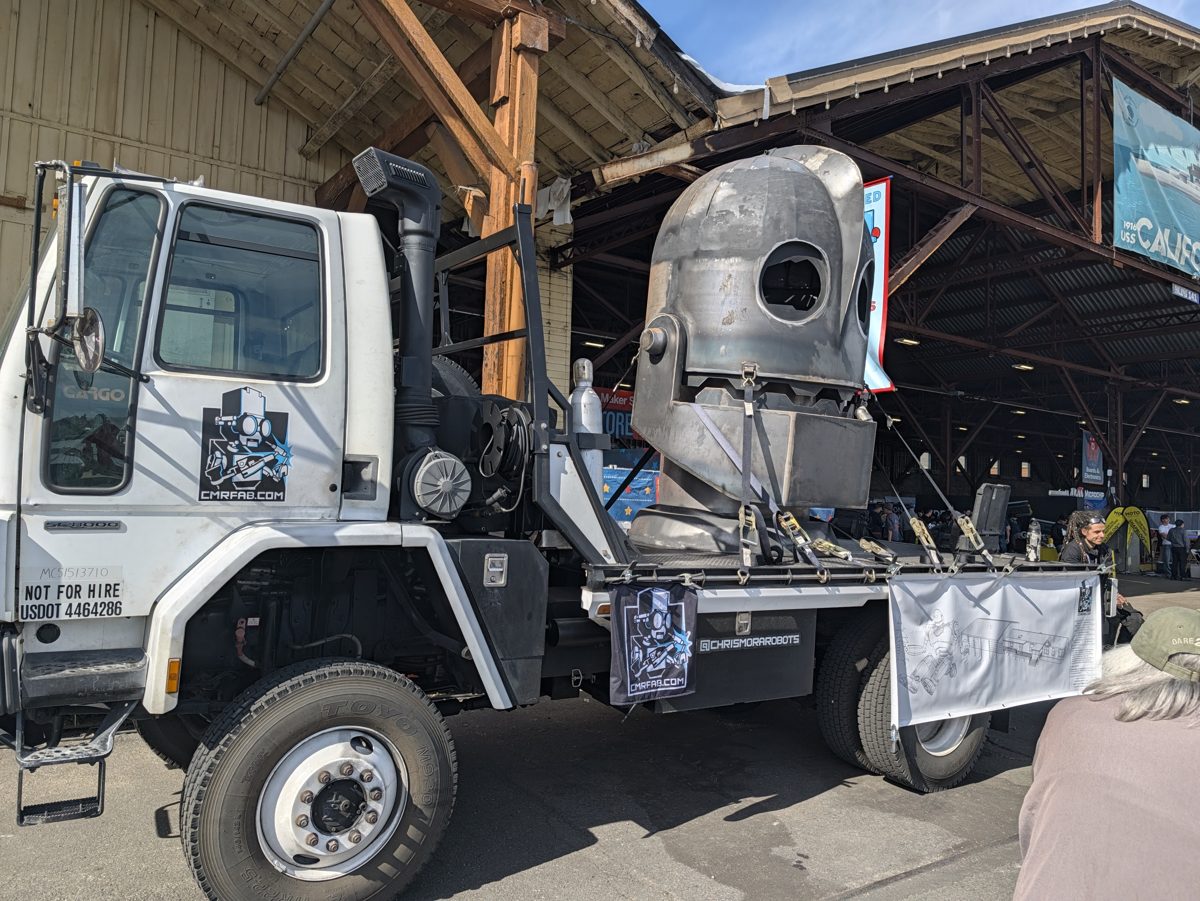
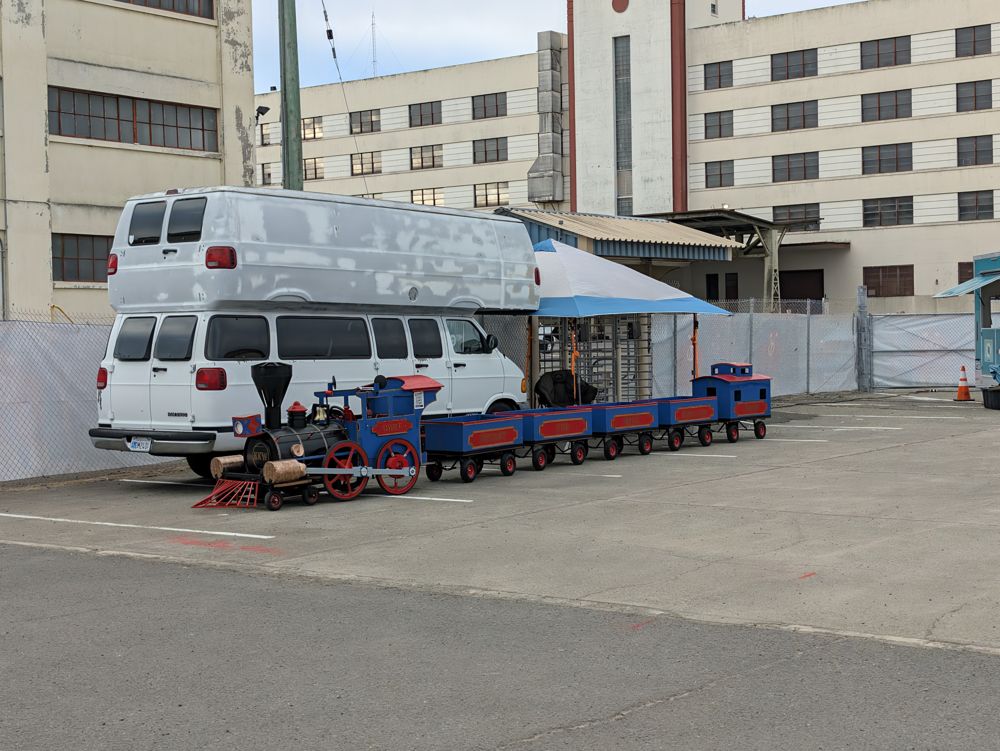
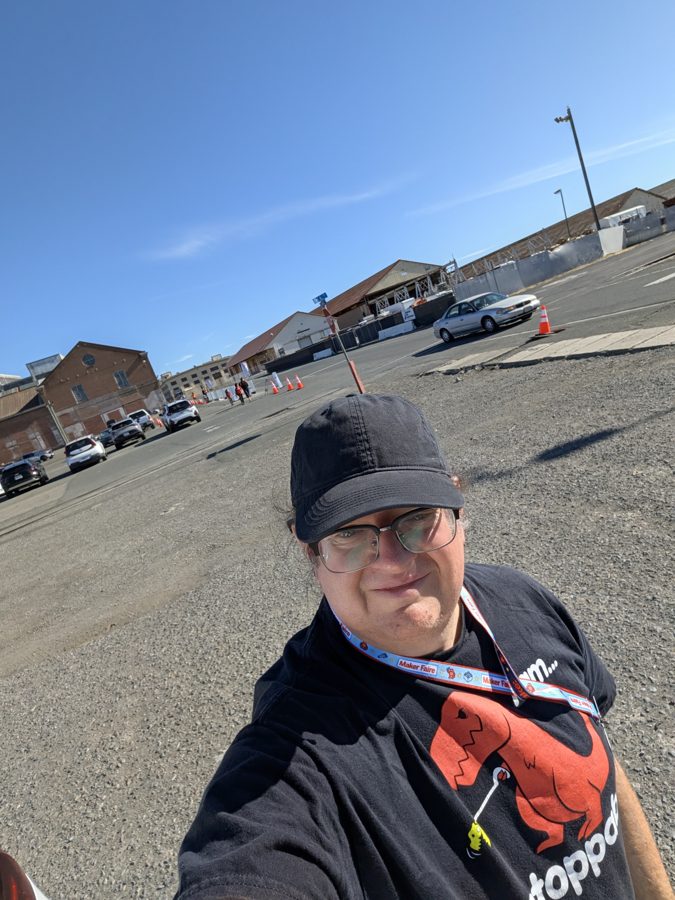
Scenes from Mare Island.