We hit 10,000 subscribers on YouTube!
We did it — 10,000 subscribers! Thank you, every one of you. I’ll be making a thank-you video this weekend, and I’m trying to do something special to celebrate. Stay tuned!
Open Source Assistive Devices and Possibly Inspirational Stories.
Full archive
Everything that’s landed on the homepage news section, plus older updates, in reverse-chronological order.
We did it — 10,000 subscribers! Thank you, every one of you. I’ll be making a thank-you video this weekend, and I’m trying to do something special to celebrate. Stay tuned!
Just got back from Bay Area Maker Faire, and it was amazing. I got to spend time with two of my daughters, and I got to meet, talk with, and be interviewed by Massimo Banzi, co-founder of the Arduino project.
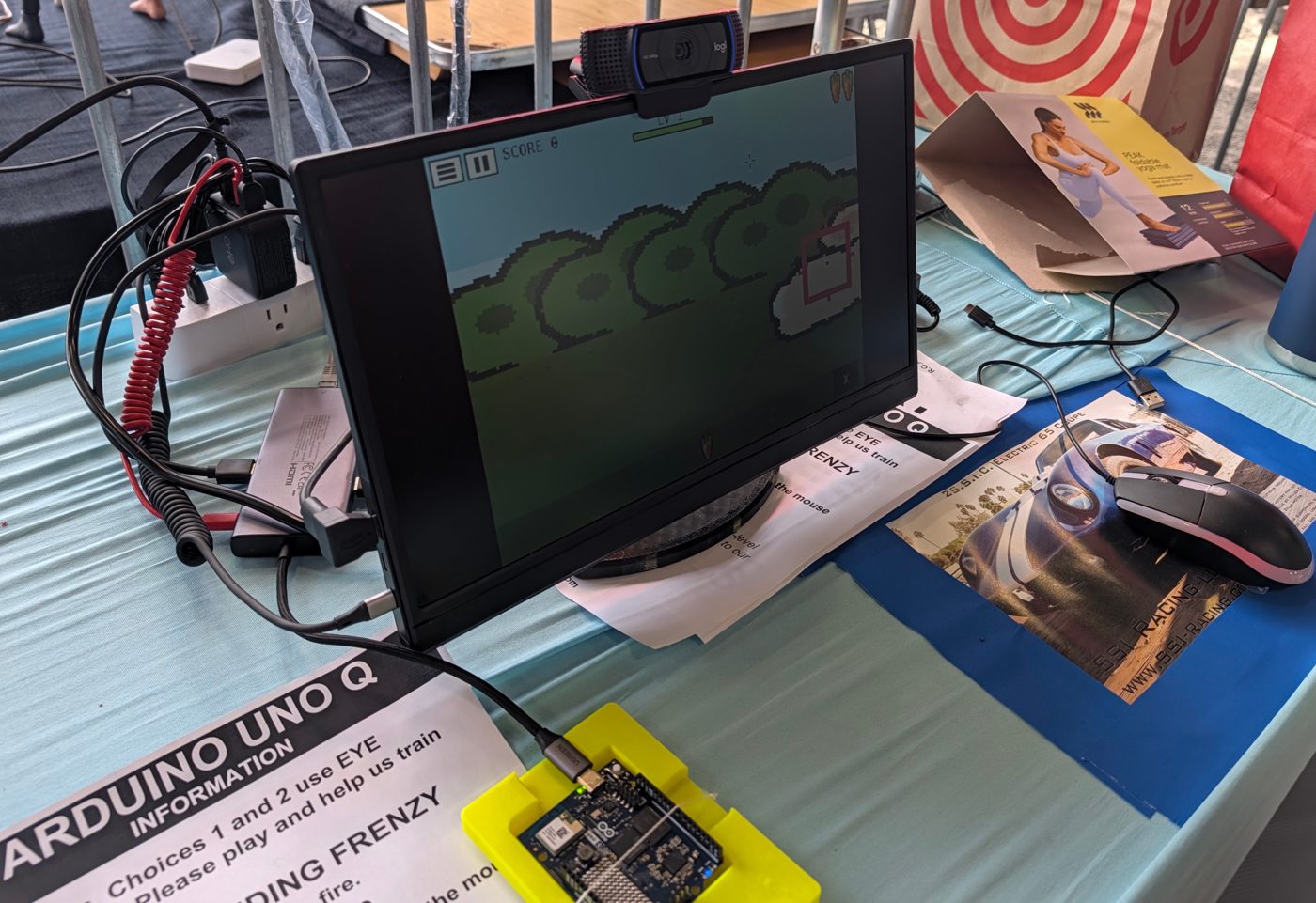
I showed off my Arduino UNO Q eye-tracking software, my entry for DigiKey’s #UNOQDreamLab, and over 100 people tested it and contributed training data. The full project write-up is on Maker.io: Eye Tracking For Special Needs with Uno Q. I had a variety of T-Rex Talker AAC devices on display and two tables of interactive assistive devices, and nothing broke. We also received an Editor’s Choice award.
I talked with the MakeGood folks about working together on a project. I met a lot of amazing makers and shared ideas, and I talked with many neurodivergent people. I believe we found a few more people with unmet needs to help over the next year.
Saw some amazing projects, and ran myself to exhaustion.
Webcam eye tracking on the UNO Q works for big targets (one box of a 4×2 grid). With the head still, eye tracking is great; past ~20° of head turn, it stops; light is the biggest lever (a red LED lamp made gaze 3.2× steadier); and the simple seven-parameter model beat the fancy one.
GPU acceleration on the UNO Q (everything so far ran on the CPU — our GPU-capable pipeline crashed in testing and the deadline won); two NoIR cameras on a dual-CSI carrier board with 850 nm IR (we knew two cameras would be better from the start; Massimo Banzi told us how to connect them); head tracking as its own input and as head-movement correction for the eyes; sip-and-puff and rubber-chicken throwing; telling users when they’ve drifted; and a possible project with MakeGood.
👍 Please give it a thumbs up on Maker.io — click the like button next to the title (free DigiKey login). Every like helps more people find it.
We’re about to hit 10,000 subscribers on our YouTube channel, and that is amazing! I have a bunch of videos in the works, but I’m getting ready to move. I’ll have a little bit of a YouTube studio setup at the new place to make it easier. But in the meantime — busy, busy!

Well… my life has been a rollercoaster since Open Sauce.
I’ve been fighting my apartment management for a month and my productivity has been way down. Trying hard to climb out of automaton-productivity mode. It will resolve after Bay Area Maker Faire — but it’s unnecessary stress, and it just won’t resolve.
Thanks for being here through both halves of the ride.
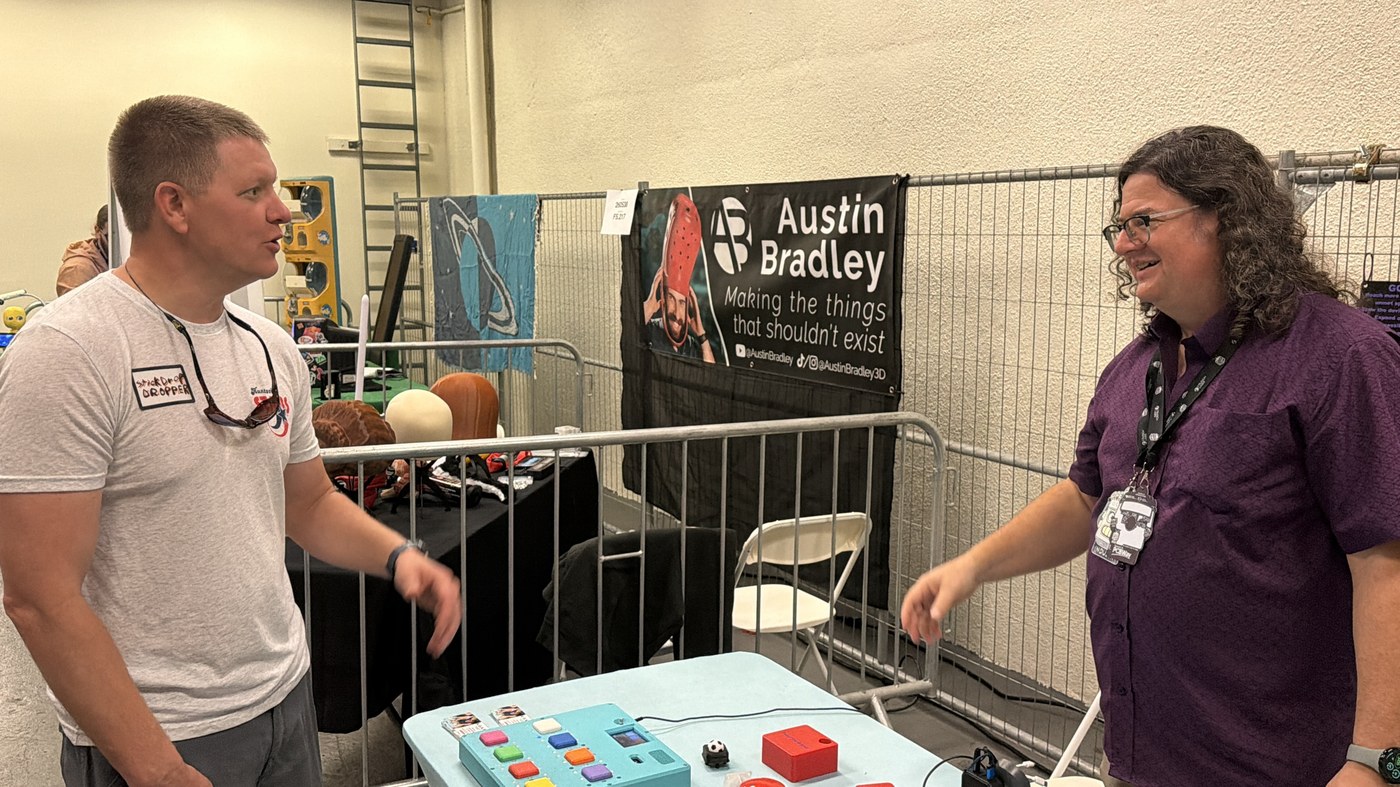
Destin swung by the R.O.A.R. booth at Open Sauce — great conversation about the T-Rex Talker, the Sip-N-Puff, and the Rubber Chicken Challenge. Several new videos will be posted this week — keep an eye on the channel.
Was not expecting that — genuinely floored. Thank you to every single one of you. Every subscriber, every comment, every share means the assistive-device work reaches more of the families and clinicians and makers who can use it.
A special’ish video is coming soon to mark the occasion. Stay subscribed and hit the bell — you know the drill.
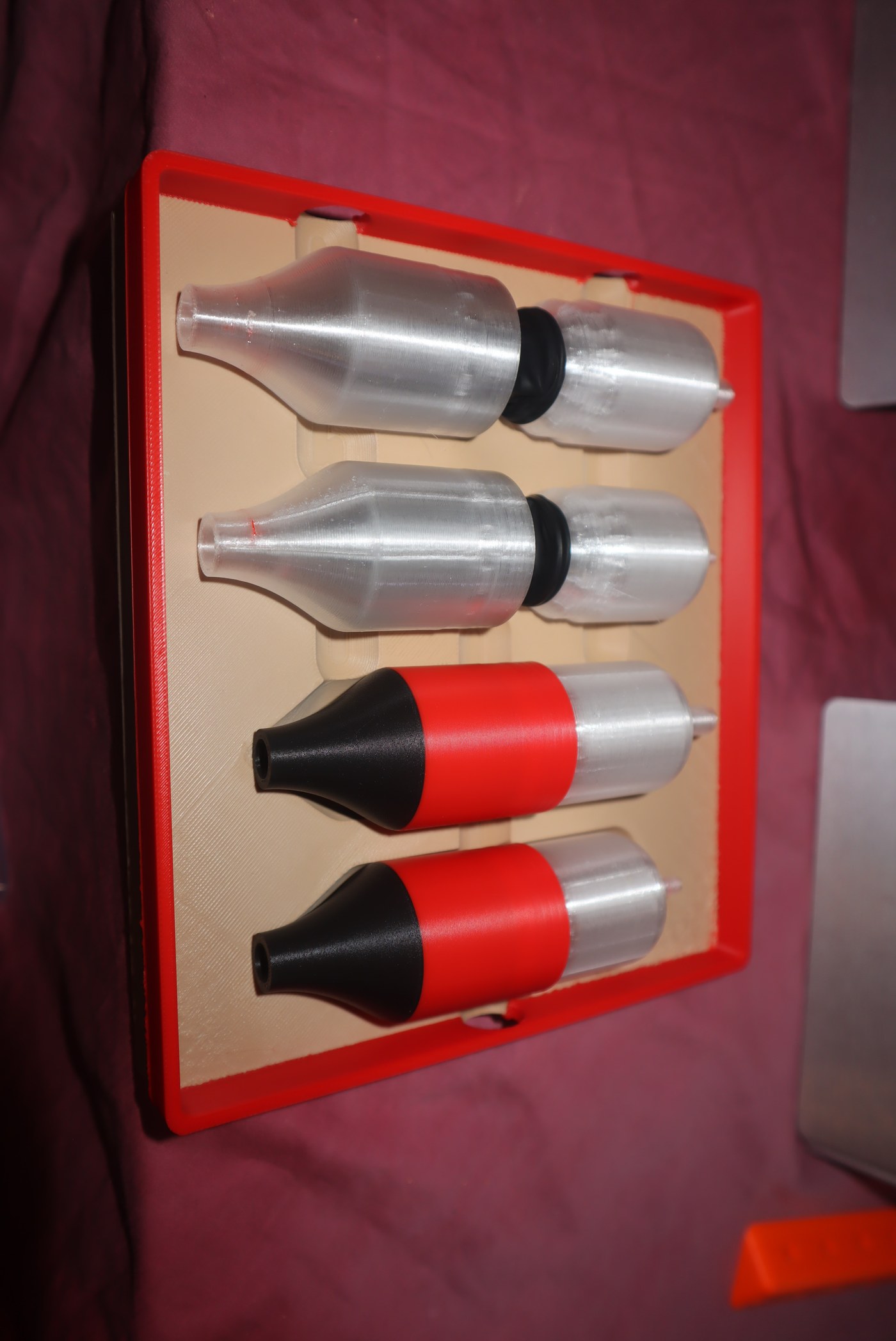
New GitHub repo: LowCostAirIsolator — an open, low-cost, latex-free breath/sensor isolator for sip-and-puff assistive devices. The prototype V0.1 includes 3D-printable front & rear shells (STL), a cost model, a fabrication brief PDF, and geometry drawings.
Plastics and CAD design by Josh (@JoshDesigns on YouTube, @Joshuaua on GitHub). Idea, research, and testing by T-Rex. Licensed CC BY-NC 4.0 — free to share and adapt for non-commercial use, commercial licensing available via main@tssfaa.com.
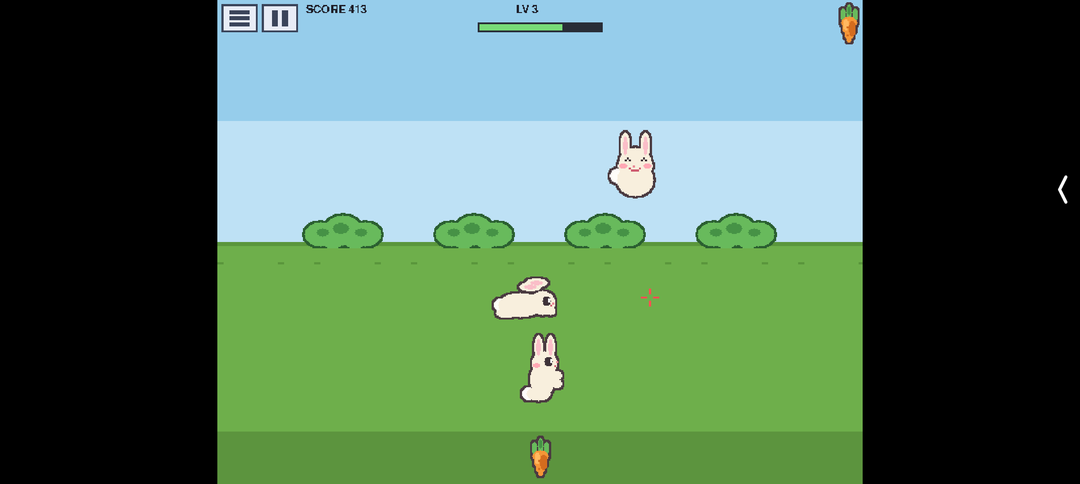
Debuted at Open Sauce 2026 alongside the T-Rex Rubber Chicken Challenge — and now it’s live and free on both Android and iPhone. Grab it from either store and start feeding bunnies.
iOS launch update: Bunny Feeding Frenzy is now on the App Store — free game, no ads, by yours truly. It’s even fun ;P. If you like it, please leave a review — thank you!
Best of all: in the stim version of the game you throw carrots by saying “Pew.” You do have to enable tilt + voice in Settings first — but still, “Pew” to throw. How cool is that?
It was a great industry day — got to have some really good one-on-one conversations with a bunch of amazing makers and industry people. The livestream test worked, but the answer is no, not something we’ll be doing regularly. Will be returning next year.

Full video + photo recap coming soon.
A decent Build-a-Box guide is ready right now — full step-by-step assembly photos. Coming soon: build guides for the MVP and the 4+1 button + rotary encoder V3 box.
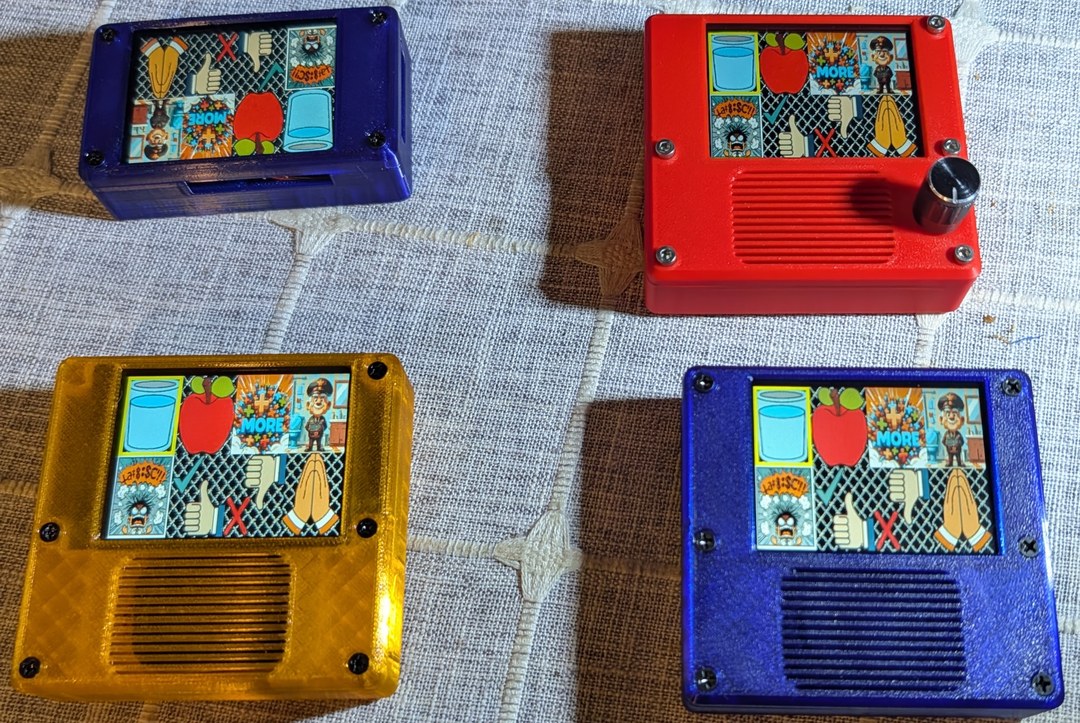
SendCutSend metal parts arrived right on schedule and the T-Rex Rubber Chicken Challenge booth is fully assembled. Sip-N-Puff sits in its orange T-Rex enclosure, three rubber chickens are standing by, and the base is engraved “Thank you Prusa · SendCutSend”.
Earlier — June 2026: the booth design was finished; below are the original renders for reference.
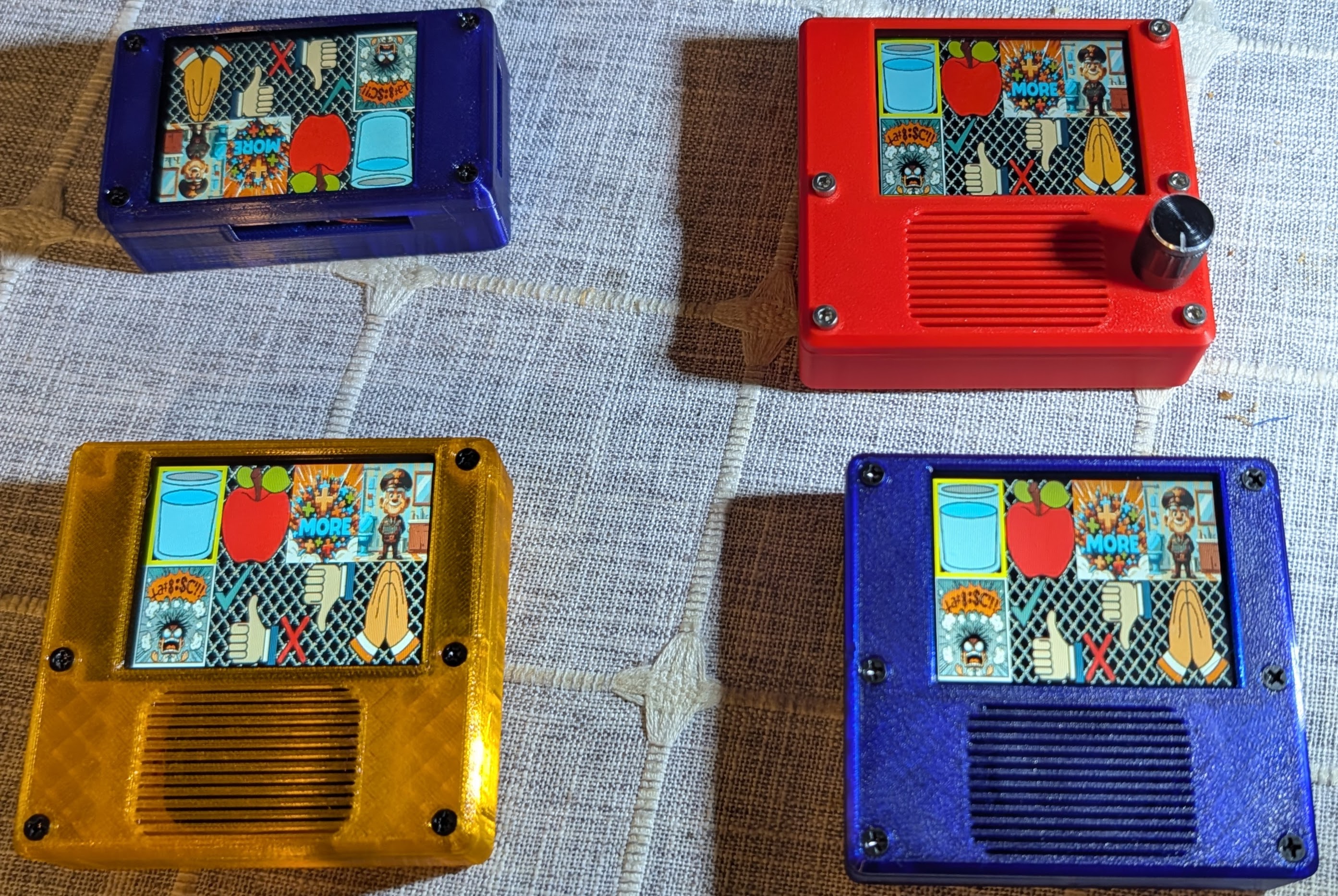
The full set of production prototype boards is in hand. Populating, bring-up, and integration are now underway.
What’s in the box:
Next up: populating boards, bench bring-up, and starting the integration work — first units for the MVP test groups after that.
Album: New PCB day — Jun 30, 2026 →
Earlier in June: the boards were sent to fab. Original renderings for reference:
A long-form conversation about R.O.A.R., open-source AAC, and building the T-Rex Talker on CircuitPython. The interview also picked up a “Hug Report” shout-out in the Adafruit CircuitPython Weekly Meeting notes for 2026-06-01.
We’re back at Bay Area Maker Faire in Vallejo for 2026. After Editor’s Choice in 2025, we’re returning with the full R.O.A.R. lineup — T-Rex Talker V3, the new sip-and-puff, and a lot more devices to put in people’s hands.
What started as a baseball cap for testing the 9-axis sensor on the Sip-N-Puff turned into a Duck-Hunt-inspired game called Bunny Feeding Frenzy. It’ll be part of the autistic stim interactive software — and it’s actually pretty fun.
Free game — coming soon to T-Rex Talker Stim Edition, Windows, Linux, and Android. Mac and iOS may come later depending on demand.
An autistic-stim variation of the V3 hardware. The hardware is laid out, plastics are designed, PCBs are on the way, and a Build A Stim Device instruction set is coming. Working with American Legion Post 468 (Julian, CA) for the charity build.
A working alpha/beta of the open-source sip and puff switch is built and has been used to operate the T-Rex Talker V3. One build, many purposes — the same hardware will reconfigure for many uses (USB mouse, two-switch keyboard, Xbox Adaptive Controller input) by editing a plain text file on the device’s USB drive. No reflashing, no IDE.
Fully compatible with all hardware from Version 2.0 onwards. We’ve also introduced two no-soldering build options — all you need are two specific parts from Amazon and a 3D printer to get started.
I’m in Chiang Mai in part to discuss the possibility of doing my PhD work at Chiang Mai University. Right now it isn’t PhD work yet — so I wrote a document about how it becomes PhD work and why that is important.
I started with a passionate document and then iterated with Gemini for an academic version. Feedback is appreciated — thank you.
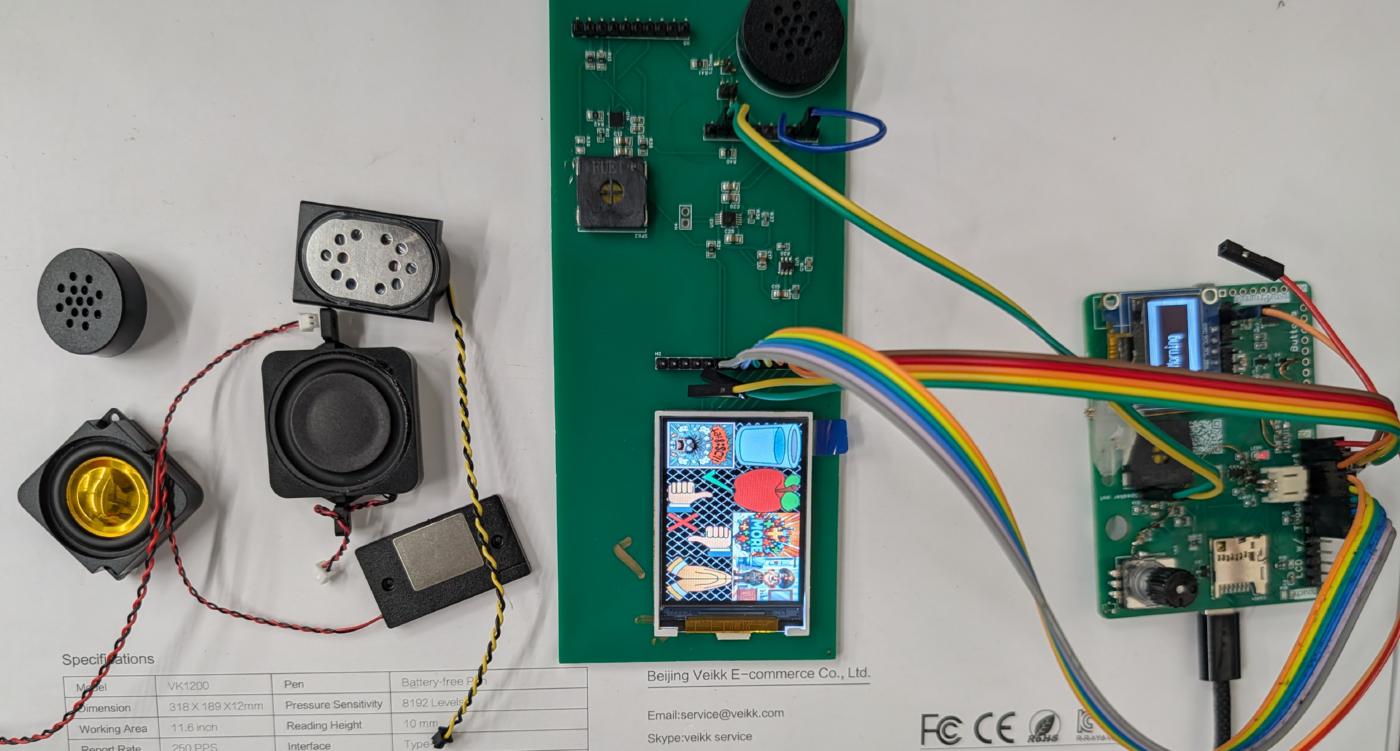
Testing speakers, motors, screens for next version.
I want to apologize for dropping out for a bit. I had some disruptions that were not inherently bad, but I don’t like change. Specifically, I had some emergency dental surgery and changes to my living arrangements that took up a lot of my time and energy.
I am going to try and start making more videos with a goal of 2 a month, but I won’t be committing to a set schedule. I’ve got a lot of things to talk about and share, from lessons of being an autistic adult to building special needs devices.
I have a bunch of little projects I’ve built that I need to release as open source:
I am actively building 30 devices to be given away to autistic children for stim / education purposes as part of a charity drive.
I am also looking for test groups for the next version of my AAC devices:
Regarding the next versions of my devices, I currently have 3 of 4 PCBs that I need designed. My plan is to send all of them off for production in the next month.
I do have a full-time job that thankfully allows me to do all this traveling and not only pays my bills but leaves me with enough left over to fund these projects. I have gotten some initial sponsorships and hope to expand those relationships to be able to build more devices for people in need.
I am currently looking for:
If you are interested in sponsoring future events or device builds, please contact me through my channel.
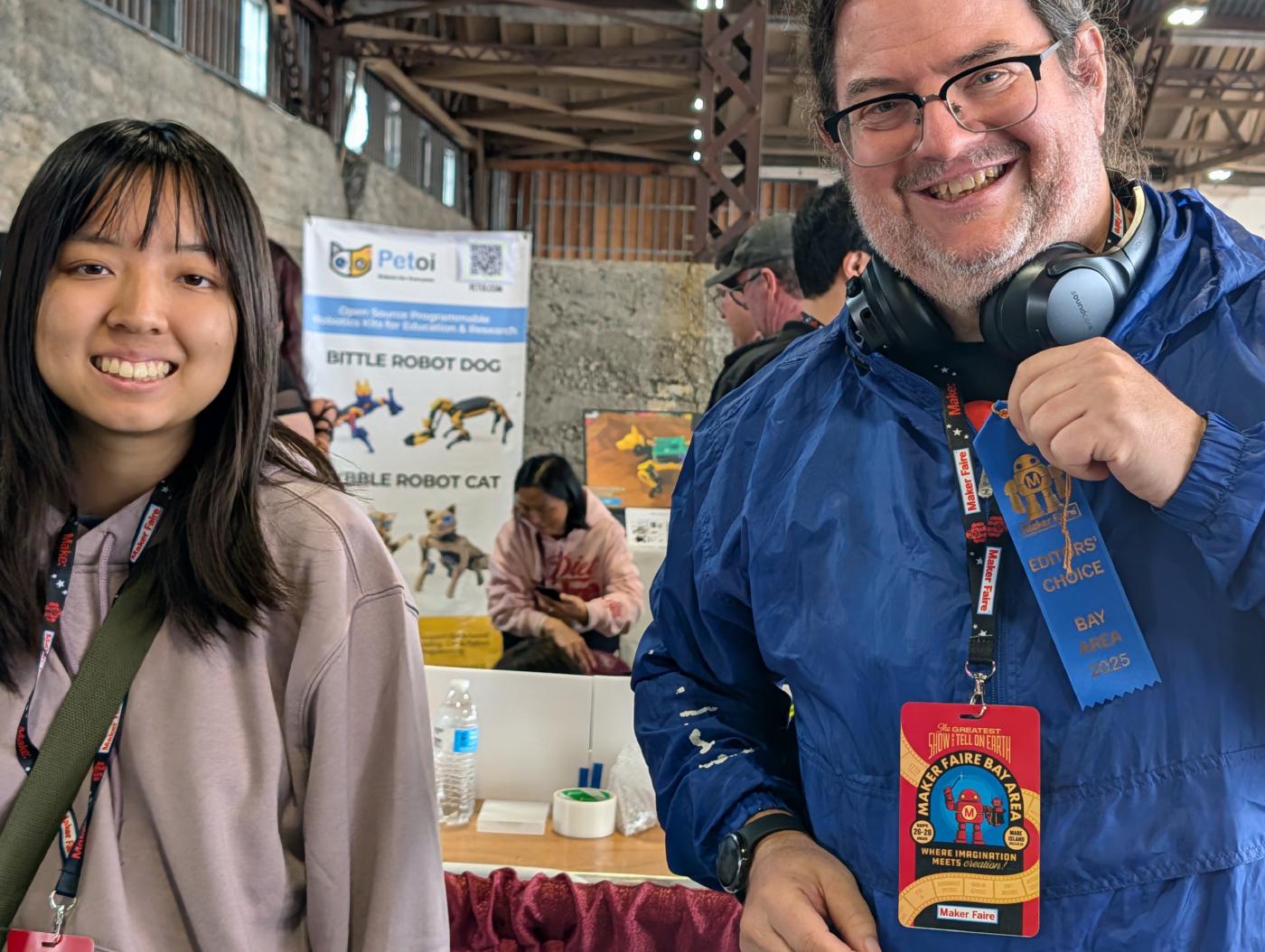
Three days, many devices on hand, a lot of amazing people — and an Editor’s Choice Award. The turnout and conversations directly shaped what we’re building for the 2026 batch.
Open Sauce 2025 recap by Sauce + — we’re featured starting around the 3:03 mark.
That’s the full archive. The most recent six items are also on the home page.
← Back to the home page